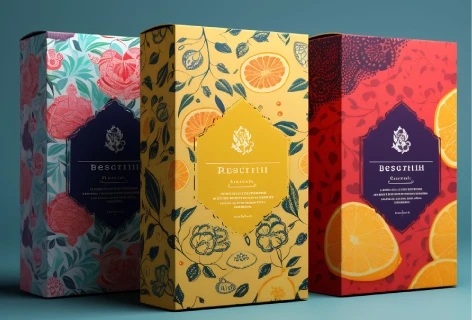

How to Choose Sustainable Packaging That Protects Products and Looks Premium
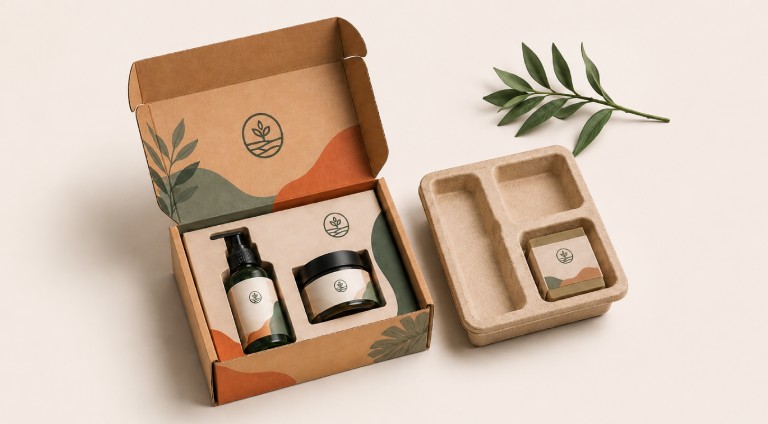
Sustainable packaging is not only about using kraft paper or removing plastic. The right packaging choice reduces unnecessary material while still protecting the product, enhancing the brand experience, and aligning with how the product is sold.
For example, a soap bar may work well in kraft paperboard, while a glass candle jar may require corrugated packaging with a molded-pulp insert or divider. The goal is not just to look eco-friendly; the packaging must still fit the product, perform properly, and present the brand clearly.
Why Sustainable Packaging Still Needs to Protect the Product
A sustainable material is only useful if it works for the product. Before choosing sustainable packaging materials, check the product’s weight, fragility, shape, handling needs, and sales channel.
A skincare gift set may use paperboard packaging, but if the bottles move around in the box, the packaging can still fail in both presentation and performance. A damaged product generates additional waste through replacements, returns, repackaging, and customer dissatisfaction.
Expert Tip: Before switching to a more sustainable material, test the full packaging system: outer box, insert, product fit, label, finish, and opening experience. The material alone does not decide whether the packaging will perform well.
Paperboard Packaging for Lightweight Retail Products
Paperboard is one of the most useful and eco-friendly packaging options for lightweight products. It is commonly used for folding cartons, sleeves, small product boxes, cosmetic cartons, soap boxes, supplement packaging, and food cartons.
Paperboard works well when the product needs a printable surface, clear branding, and a clean retail presentation. It can be printed with product information, ingredients, usage instructions, barcodes, and brand artwork. White paperboard is often better for clean graphics and color accuracy, while kraft paperboard creates a more natural or eco-friendly appearance.
Paperboard is less suitable for heavy, glass-based, liquid-filled, or multi-item sets sold without support. In those cases, the carton may need an insert, divider, or reinforced structure to keep the item positioned correctly.
Kraft Packaging for Natural and Eco-Positioned Brands
Kraft packaging works well for brands that want a natural, simple, or low-plastic look. It is commonly used for soap packaging, bakery boxes, sleeves, small retail cartons, mailer boxes, food packaging, handmade products, skincare, candles, wellness items, and natural retail products.
However, Kraft is not always the best choice for every design. Colors may look softer or less vibrant on kraft than on white paperboard. Fine details, light colors, and photographic artwork may not appear as sharp as they would in print. If the brand needs bright colors, luxury contrast, or very clean graphics, white paperboard with a more restrained design may be a better choice.
The best use of kraft packaging is when the brand's style aligns with the recycled material. It works well with simple typography, black or dark ink, minimal graphics, labels, sleeves, and natural product positioning.
Corrugated Packaging for Strength, Shipping, and Product Kits
Corrugated packaging is a practical, sustainable choice when products need more strength than standard paperboard. It is commonly used for corrugated mailer boxes, shipping boxes, product kits, subscription boxes, candle packaging, food jar packaging, apparel packaging, and heavier retail items.
Corrugated board provides better structural support for products that may be stacked, handled, shipped, or packed in bundles. It can also be printed for branding, making it useful for e-commerce packaging where the box is part of the customer experience.
For example, an online skincare brand may use a corrugated mailer box with a paperboard insert to keep products neatly arranged. A food brand may use corrugated dividers to separate glass jars. A candle brand may use a corrugated box with molded pulp or foam support to protect fragile glass containers.
Corrugated is most useful when the product needs a stronger structure than a standard retail carton can provide.
Molded Pulp Inserts for Paper-Based Product Protection
Molded pulp is a strong option when brands want shaped protection with a paper-based look. It is often used for candle jars, glass bottles, skincare jars, electronics accessories, food jars, gift sets, and fragile product packaging.
Unlike flat paperboard, molded pulp can be shaped around the product. This helps reduce product movement inside the box and replaces plastic trays or foam inserts in certain applications.
Molded pulp also creates a natural, sustainable appearance, which works well for eco-positioned brands. Standard molded pulp has a textured finish, while premium molded fiber can look smoother and more refined.
The main thing to consider is quantity and tooling. Custom-molded pulp inserts may incur setup costs, so they are usually more suitable once the product layout is confirmed and the order quantity justifies the investment.
Recyclable Labels and Sleeves for Sustainable Branding
Labels and sleeves are often overlooked in sustainable packaging, but they can affect both presentation and recyclability. A product may use a paper-based box, but if the label, coating, or finish is not considered, the overall packaging may become harder to recycle or less consistent with the brand’s sustainability message.
Paper labels can work well for dry products, boxes, jars, bottles, candles, and retail packaging. Kraft labels can support a natural look, while white paper labels provide better color contrast and readability. For products exposed to moisture, oil, refrigeration, or handling, paper labels may need protective coatings or alternative materials.
Sleeves are also useful when brands want to add product information or campaign branding without changing the main packaging structure. A packaging sleeve can be added around jars, cartons, trays, food packs, soap bars, or gift boxes to create a branded presentation with less material than a full secondary box.
The best label or sleeve choice depends on the product surface, handling conditions, print requirements, and whether the packaging needs moisture resistance.
Expert Tip: Do not judge sustainability by the outer material alone. A recyclable box with poor fit, weak structure, or the wrong insert can still create more waste if products arrive damaged or need replacement.
When Protection Matters More Than Material Reduction
In some cases, removing too much material or choosing the lightest option can increase risk. Protection should remain the priority when products are fragile, heavy, glass-based, liquid-filled, sharp-edged, or sold as multi-item sets.
Use extra care when the product must stay upright, labels may rub during handling, or the packaging must look premium when opened. Candles, jars, bottles, electronics, cosmetics, and food products may still need inserts, dividers, a stronger board, or additional internal support.
Sustainable Packaging Choices by Product Type
Sustainable packaging should match the product type, not just the material preference. The table below shows practical options for common products and what to check before making a choice.
|
Product Type |
Practical Sustainable Options |
What to Watch For |
|---|---|---|
|
Skincare and cosmetics |
Paperboard cartons, kraft sleeves, molded pulp inserts, recyclable labels |
Bottle stability, label readability, moisture exposure, and premium appearance |
|
Candles and jars |
Corrugated boxes, molded pulp inserts, kraft cartons, paperboard sleeves |
Glass protection, jar weight, insert fit, product movement |
|
Food jars and bottles |
Corrugated dividers, paper labels, kraft sleeves, paperboard cartons |
Product separation, label durability, handling, and shelf presentation |
|
Soap and handmade products |
Kraft cartons, paper wraps, sleeves, paper labels |
Moisture, scent transfer, print readability, retail display |
|
Subscription boxes |
Corrugated mailer boxes, paperboard dividers, kraft inserts |
Mixed product layout, box strength, and unboxing experience |
|
Gift sets and PR kits |
Rigid paperboard boxes, molded pulp trays, printed inserts, sleeves |
Premium feel, product order, insert stability, and material use |
|
Retail samples |
Display boxes, paperboard cartons, recyclable labels, and small sleeves |
Shelf visibility, easy access, product grouping |
Use these examples as a starting point, then confirm the final material, insert, label, and finish against the actual product sample.
How to Make Sustainable Packaging Look Premium
Environmentally friendly packaging does not have to look plain or low-cost. A premium look can come from clean structure, better fit, strong typography, consistent color, and simple finishing choices.
Instead of using many decorative effects, focus on the details that buyers notice first: how the box opens, how the product sits inside, how readable the label is, and whether the material feels suitable for the product.
A kraft sleeve with clean black printing can look premium for a natural soap brand. A white paperboard carton with matte finish and spot UV on the logo can work well for skincare. A corrugated mailer box with a printed insert can make an e-commerce kit feel more complete without using excessive material.
The best eco-friendly packaging looks intentional, not unfinished.
Common Sustainable Packaging Mistakes to Avoid
One common mistake is assuming that "Kraft" automatically means "sustainable" or "premium". Kraft works best when the brand style, print design, and product type support a natural look.
Another mistake is switching from plastic or foam to paper-based packaging without testing product fit. Paperboard, corrugated, and molded pulp can work very well, but the design must properly hold the product.
Brands also sometimes remove protective material too aggressively. If the product becomes less secure, the result may be more damage and more waste. Sustainability should be balanced with product protection, customer experience, and production practicality.
Need Help Choosing Sustainable Packaging?
Printingblue can help you choose sustainable packaging options based on your product size, weight, protection needs, brand style, quantity, and budget. Whether you need paperboard cartons, kraft sleeves, corrugated mailer boxes, molded pulp inserts, recyclable labels, or custom dividers, the packaging should be selected first based on the product.
Share your product details, packaging goals, preferred material, quantity, and artwork status, and our team can recommend a practical packaging structure that fits your product, supports your brand positioning, and keeps sustainability goals realistic for production.
FAQs About Sustainable Packaging Choices
Q: What is the best sustainable packaging material?
A: The best material depends on the product. Paperboard suits lightweight retail items, kraft supports natural branding, corrugated adds structure, and molded pulp provides shaped paper-based protection.
Q: Is corrugated packaging sustainable?
A: Corrugated packaging is often considered a practical paper-based option, especially when strength, shipping support, and product protection are needed. Its suitability depends on material composition, print coverage, coatings, and local recycling systems.
Q: Can sustainable packaging still look premium?
A: Yes. Sustainable packaging can look premium when the structure is clean, the product fit is accurate, the typography is strong, and the finish is used carefully. Matte finishes, clean sleeves, printed inserts, and simple foil details can improve presentation without overdesigning.
Q: What is the best sustainable insert for fragile products?
A: Molded pulp, corrugated dividers, and paperboard inserts are common paper-based insert options. The best choice depends on the product’s weight, fragility, shape, and whether it needs cushioning, separation, or a fitted cavity.
Q: When should sustainability not compromise protection?
A: Sustainability should not compromise protection when the product is fragile, heavy, glass-based, liquid-filled, or sold as a set. If the product breaks, leaks, or arrives damaged, the packaging has failed.
Professional Design & Printing Services
Printingblue offers customized commercial printing solutions to meet your business needs. Our expert team delivers top-notch design and printing services that exceed expectations. Contact us today for a free consultation.